
Being an “invisible illness”, fibromyalgia remains poorly understood and frequently misunderstood, despite affecting millions worldwide.
Raising awareness is crucial for improving diagnosis, treatment, social acceptance, and support for those living with the condition. It also fosters empathy, encourages research, and challenges the stigma surrounding invisible illnesses.
Greater awareness can help healthcare professionals recognise symptoms earlier and reduce diagnostic delays. Public awareness campaigns can educate both medical professionals and the general public, leading to quicker and more accurate identification of the condition.
Fibromyalgia is often dismissed or minimised because it is an “invisible illness.” People with fibromyalgia do not show outward signs of disease, leading to scepticism from friends, family, employers, and even healthcare providers. Some still view fibromyalgia as psychosomatic or exaggerated, despite scientific evidence demonstrating that it is a real and debilitating condition. Awareness efforts can challenge these misconceptions. Public education initiatives, and media coverage can help convey the reality of living with fibromyalgia.
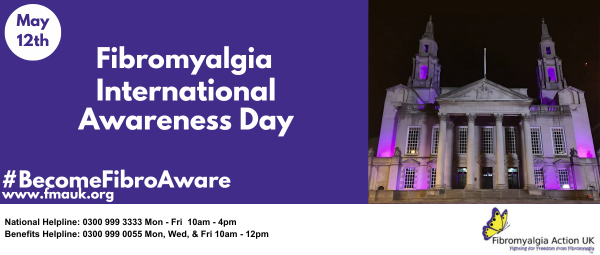
When society understands that fibromyalgia is a legitimate medical condition with physical and neurological underpinnings, those affected are more likely to be believed and supported. Which can reduce feelings of isolation and invalidation. Lighting up buildings will be accompanied by stories in the press with case studies etc. Having a local building lit up, and wondering why, will encourage people to read these articles.
Greater public awareness can drive funding for research into better treatments and, ultimately, a cure. When more people recognise the burden of fibromyalgia, there is increased pressure on governments, pharmaceutical companies, and medical institutions to prioritise fibromyalgia research. Awareness campaigns also empower patients to advocate for their health needs and seek more comprehensive care.
Awareness initiatives that highlight the psychological impact of fibromyalgia can promote holistic care approaches that address both physical and mental health. Destigmatising mental health issues in chronic illness encourages patients to seek psychological support and reinforces the idea that their experiences are valid.
Because fibromyalgia is invisible, many employers fail to provide necessary accommodations or even recognise the legitimacy of the condition. Raising awareness helps employers understand how fibromyalgia affects productivity and how small adjustments – such as flexible schedules, remote work options, and ergonomic workspaces – can improve employee well-being. Educating the workforce on invisible illnesses fosters inclusive workplaces where those with chronic conditions can thrive.
Public understanding of fibromyalgia remains limited. Many people are unaware of the severity and complexity of the condition. Awareness campaigns – whether through social media, documentaries, or public events – can educate society on what it means to live with fibromyalgia. The more people understand fibromyalgia, the better they are equipped to support loved ones living with the condition. Friends and family who recognise the challenges can offer more meaningful emotional and practical support. This understanding also reduces judgment and fosters compassion.
We can achieve all of these by lighting up buildings in purple on International Fibromyalgia Day. The more buildings that we can get lit, the more likely we are to get comprehensive press coverage and the wider the awareness. So if you see a building lit up in Purple on May 12th, take a photo and share it on your Social Media. If you know of a building that may light up to support us, please send details including contact information wherever possible by clicking here.




Leave A Comment